Colorado faces another budget gap in 2026, needing to cut nearly $1 billion from the state spending in order to balance the budget this year. Health care spending makes up about one-third of the state’s budget, so legislators may consider cuts to health care financing this year to help them achieve a balanced budget.
But – budget cuts don’t hurt just hospitals. They hurt patients. Hospitals are already being forced to make difficult choices about which services they can afford to keep open.
With $10 billion in hospital cuts projected by 2032 because of H.R. 1 at the federal level, it’s critical that we shore up the state’s other hospital financing mechanisms – including the CHASE fee and provider reimbursement rates – before the damage becomes irreversible.
CHA’s Take:
Colorado’s hospitals have become the state’s pressure valve – absorbing financial strain from insurers, policymakers, rising uncompensated care, and increasing expenses. But even the strongest system can only take so much pressure. If hospitals fail, the entire health care system fails.
Medical Education Funding
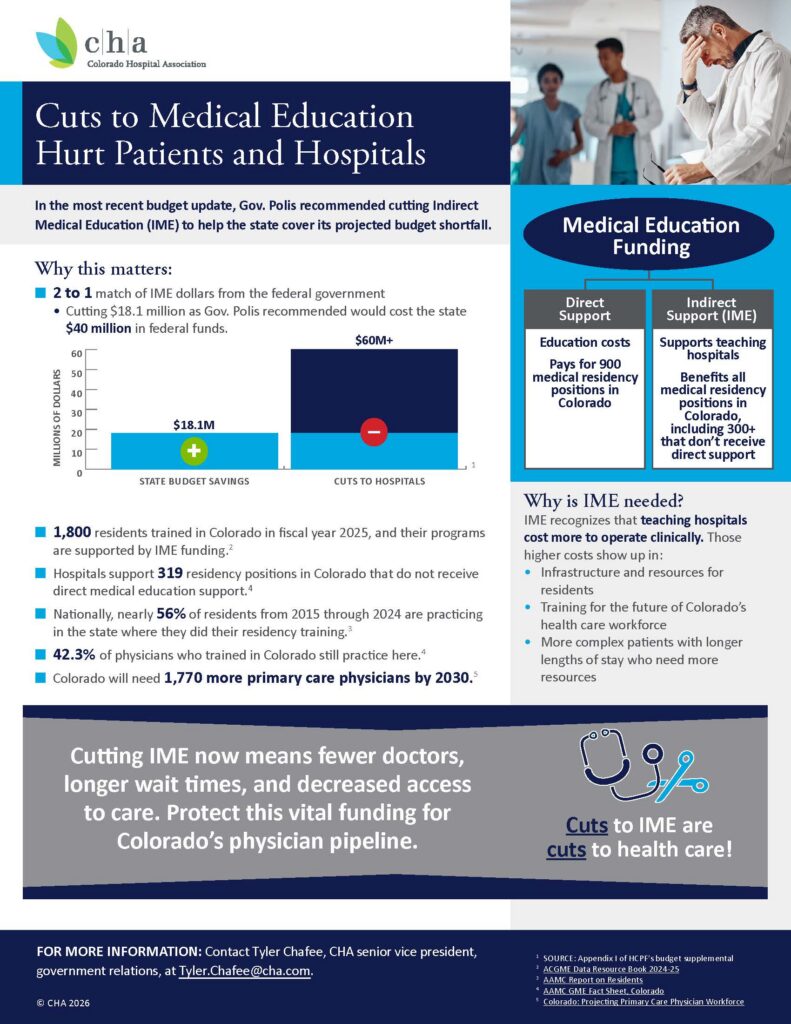
In the most recent budget update, Gov. Polis recommended cutting Indirect Medical Education (IME) to help the state cover part of its projected budget shortfall. Unfortunately, this idea – which would save the state just $18 million – would result in an additional $40 million lost in federal matching funds.
At a time when the health care workforce pipeline already faces significant challenges, harming the state’s training programs for physicians would be a mistake that jeopardizes access to care for patients all across the state.
Cuts to Medical Education Fact Sheet
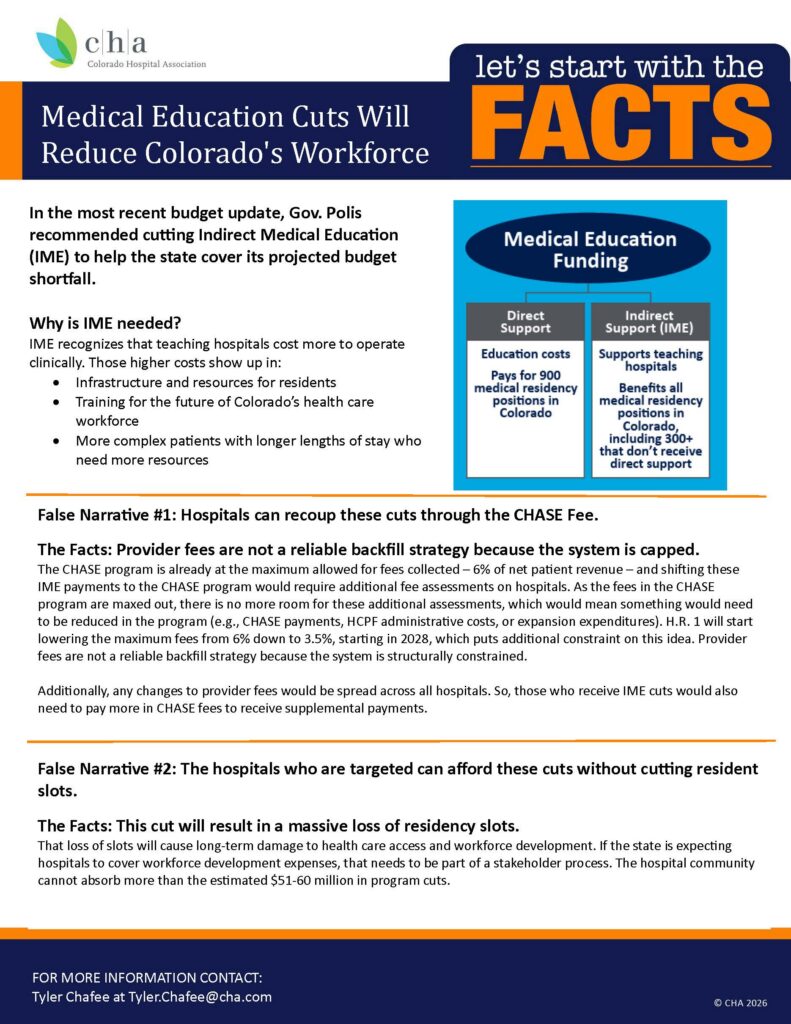
Just the Facts: Cuts Will Reduce Colorado's Workforce
Click below to learn more from Colorado doctors
The Hospital Provider Fee
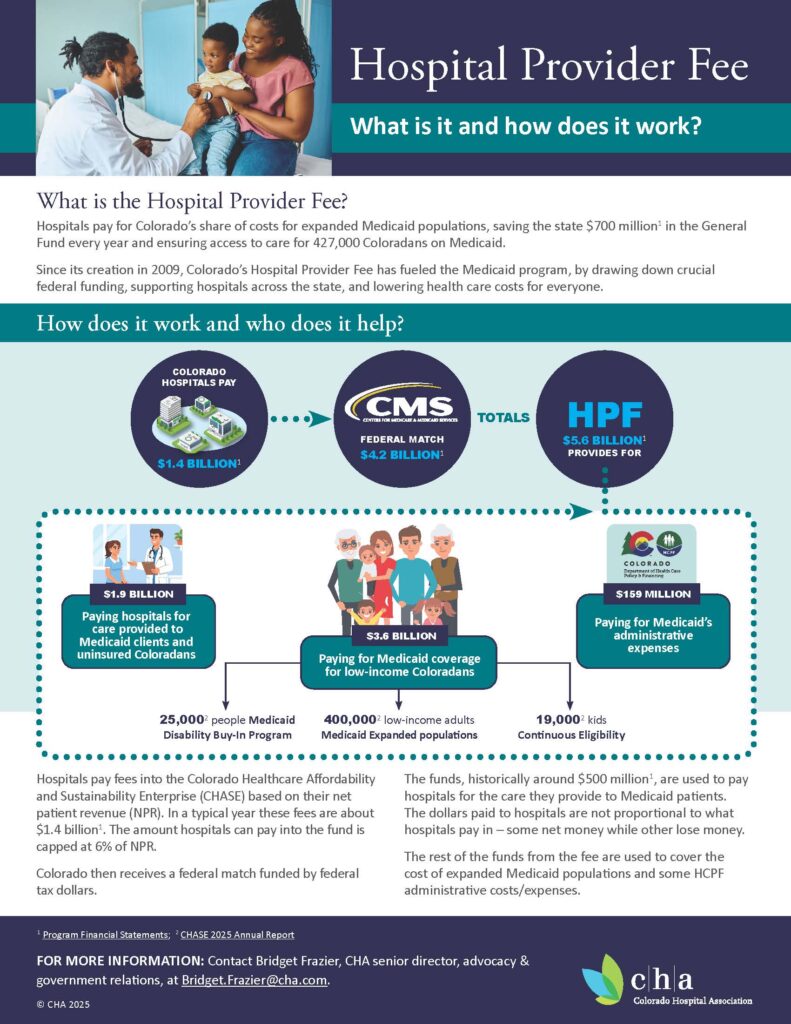
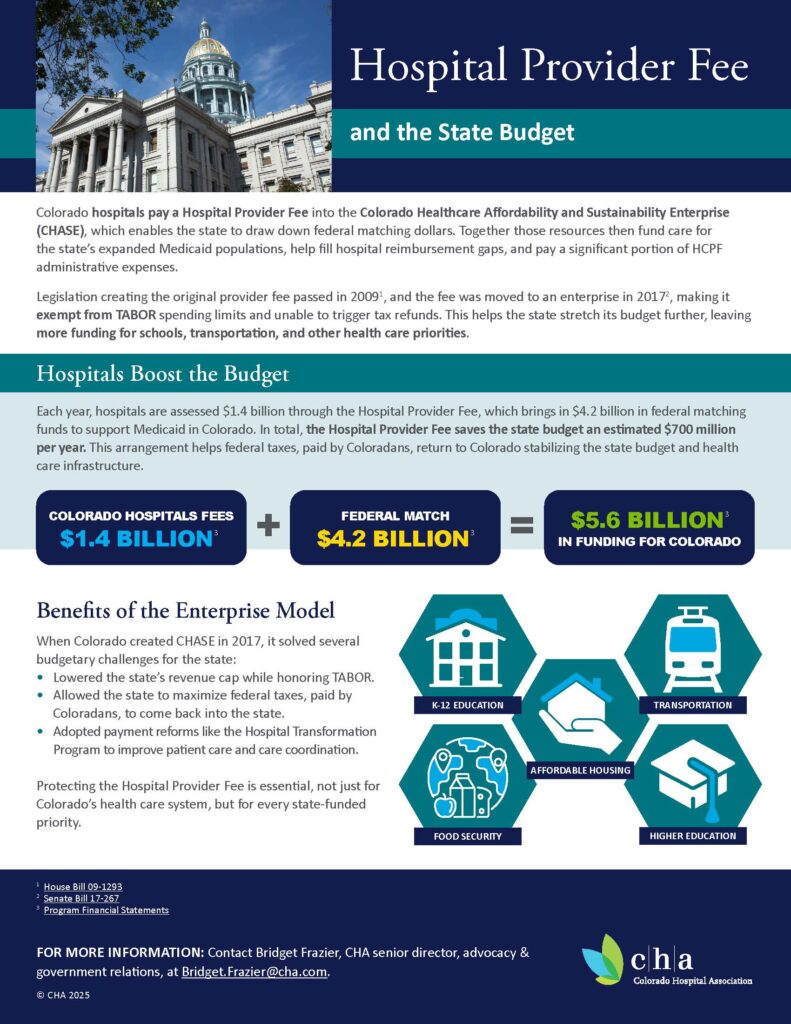
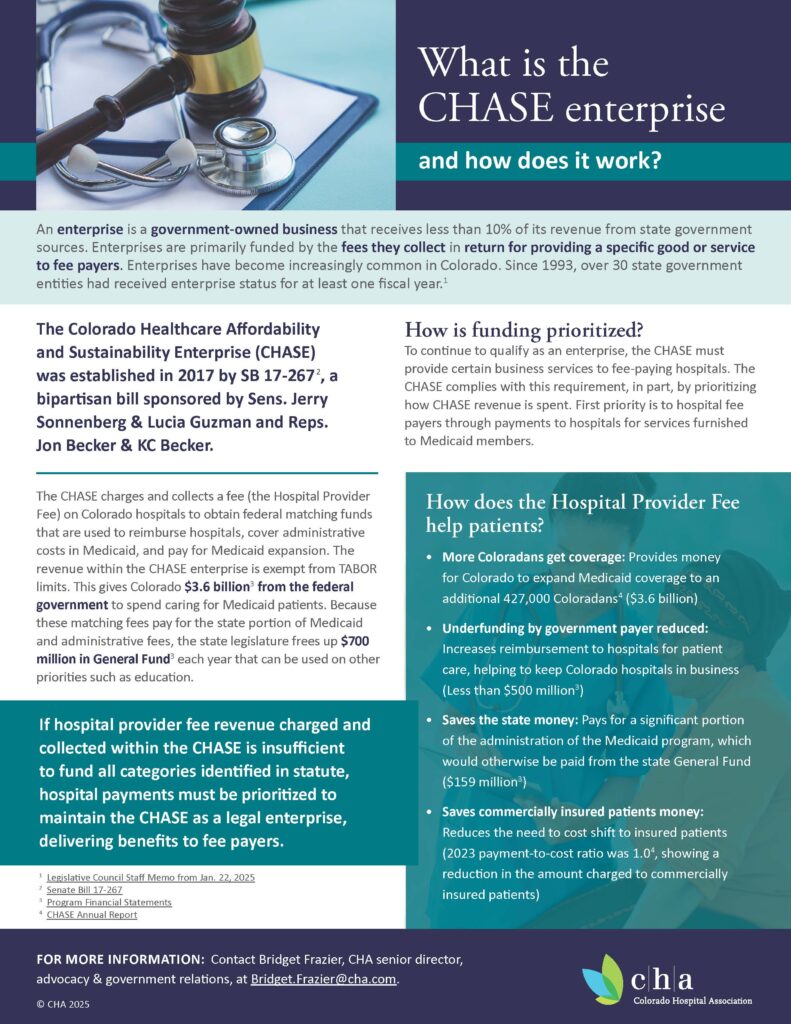
The Hospital Provider Fee (HPF) is the foundation of Colorado’s Medicaid stability. The HPF that funds the Colorado Healthcare Affordability and Sustainability Enterprise (CHASE), is one of Colorado’s most effective and efficient public-private partnerships in Colorado that brings in $4.2 billion in federal dollars every year. It’s designed to be a win-win-win program that funds providers who serve Medicaid patients, Medicaid expansion, and helps supplement administrative costs for the program.
Unfortunately, with federal match funding ratcheting down under H.R. 1, the stability of the HPF, the main source of funding for Colorado’s Medicaid program, is at risk. State budget cuts to the enterprise would destabilize the program and risk , putting 21 percent of Coloradans who receive Medicaid at risk of losing access to health care.
Destabilizing the CHASE program doesn’t just hurt people on Medicaid, it sets off a chain reaction that limits health care access for all Coloradans by adding more financial burden on a hospital safety net that has already been forced to close lines of service at hospitals across the state.